
When summer heat strikes, fans and open windows quickly reach their limits. The upstairs bedroom remains stifling long past midnight, office productivity slumps by mid-afternoon, and server rooms quietly risk costly overheating.
While most people view air conditioning strictly as a quick fix for extreme heat, a professionally installed system delivers far broader long-term advantages. Based on our experience installing systems across Yorkshire, here is a complete guide to the key benefits of air conditioning and how to ensure you choose a system that delivers maximum value for your property.
The Core Benefits of Air Conditioning
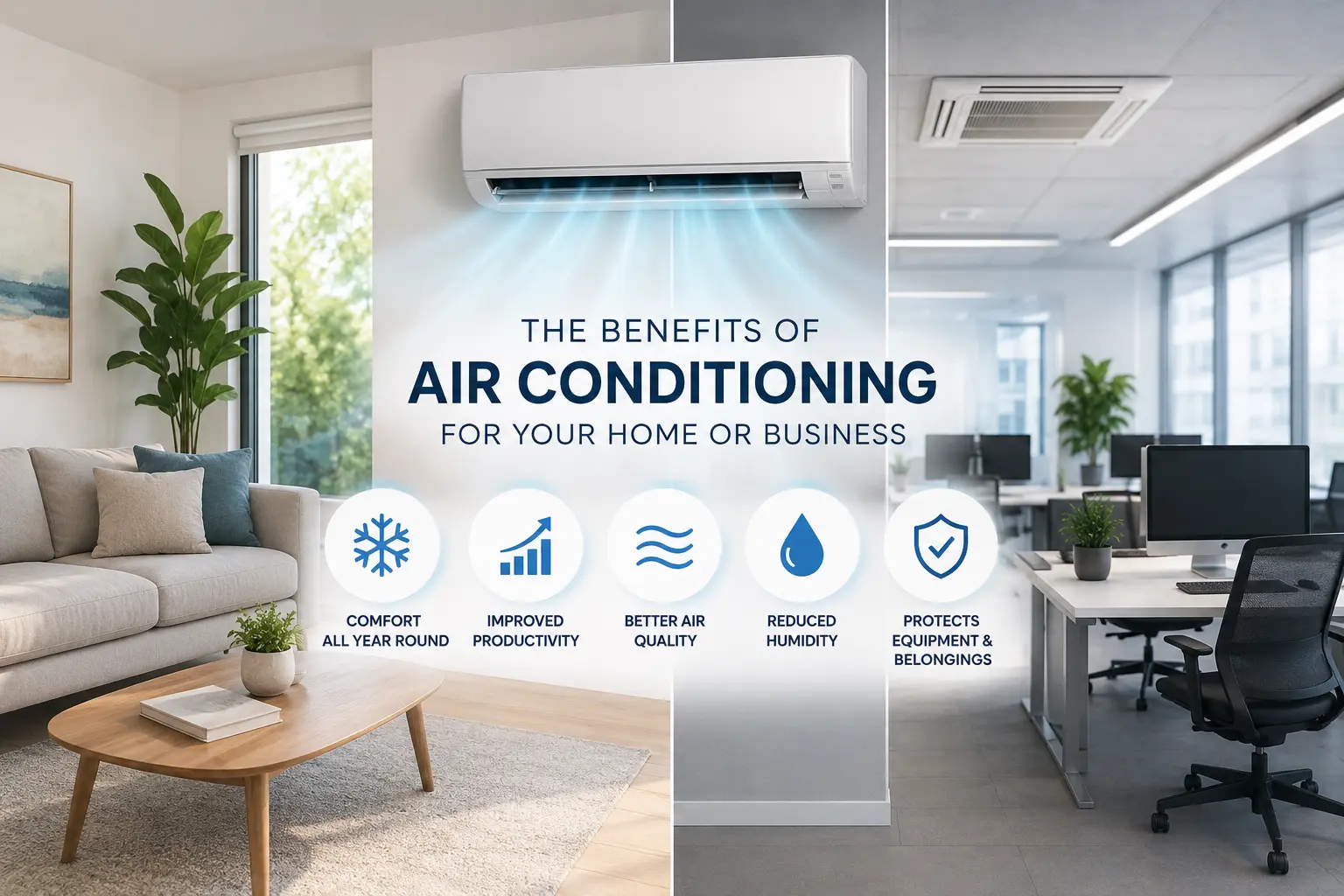
Active Temperature Reduction: Unlike fans that simply circulate warm air, air conditioning actively extracts heat from the room to deliver a genuine drop in temperature.
Superior Humidity Control: Air conditioners extract excess moisture from the air, eliminating clammy indoor conditions and preventing damp and mould growth.
Improved Indoor Air Quality: Built-in filtration traps dust, pollen, and airborne allergens, creating a healthier environment for sufferers of hay fever or respiratory issues.
Year-Round Energy Efficiency: Modern heat-pump systems provide both high-efficiency cooling in summer and low-cost heating in winter.
Enhanced Productivity and Sleep Quality: Maintaining an optimal indoor temperature directly improves focus in the office and supports deep, uninterrupted sleep at home.
Asset and Equipment Protection: Precision cooling prevents critical IT hardware, servers, and sensitive stock from suffering heat-related failures.
When Fans and Ventilation Aren’t Enough
Most people only think about air conditioning once a room becomes unbearable. The upstairs bedroom never cools down overnight. The office turns stifling by 2pm, even with every window open. The server room quietly overheats in the corner. By that point, ventilation alone clearly isn’t solving the problem.
Here’s what we’ve learned from installing air conditioning across homes and businesses in Yorkshire — and how to work out whether, and what kind of, system is actually worth the investment.
Where Fans and Open Windows Fall Short
The Upstairs Bedroom
Heat rises, and upstairs rooms sit directly beneath roof spaces that absorb sun all day. A fan merely pushes warm air around the room without lowering the temperature. Installing dedicated bedroom air conditioning actively removes that trapped heat, ensuring comfortable sleeping conditions regardless of outdoor weather.
The Busy Office
Opening windows only helps when the air coming in is actually cooler than the air inside, and on a warm day it often isn’t. Add a room full of computers, printers, and people, plus large windows letting in sun, and you’ve got a space generating more heat than any draught can clear. That’s why offices often feel worse by mid-afternoon than the weather outside would suggest.
Server Rooms and Equipment Spaces
Basic ventilation might keep an ordinary room bearable, but IT equipment generates its own constant heat. Most hardware only operates reliably within a fairly narrow temperature range. Push past that range and the risk isn’t just discomfort, it’s hardware faults, shutdowns, or a shortened equipment lifespan. These spaces need dedicated, consistent cooling that doesn’t fluctuate with the weather.
Unlocking the Full Benefits: Sizing and Placement
To enjoy the full benefits of air conditioning, the system must be tailored precisely to the building.
Cooling Load Beyond Room Size: Sizing calculations must account for room dimensions alongside window orientation, glazing area, occupancy levels, and internal heat sources. A south-facing room with floor-to-ceiling glass requires a vastly different setup than a shaded back office.
The Danger of Oversizing: An oversized unit cools a room too rapidly and turns off before removing adequate humidity, leaving the space cold and clammy. This frequent cycling wastes energy and increases mechanical wear. Correct sizing is a precise balance.
Strategic Unit Placement: Indoor units must be positioned to distribute air evenly and prevent cold spots. Outdoor units require clear airflow and shade where possible to reject heat efficiently without overworking.
Comparing Your Options
Air Conditioning vs Portable Fans
Fans create a temporary wind-chill effect on your skin but do not change the room temperature or remove humidity. Modern split-system air conditioners actively process and cool the air, delivering true climate control across spaces of any size.
Year-Round Benefits: Heating and Cooling in One
Many modern systems, including the Mitsubishi Electric ranges we install, provide both heating and cooling from the same unit. A cooling-only system can suit a room that’s only ever too hot, and it costs less upfront. But most homes and businesses get far more use from a heating-and-cooling system across the year, and it often works out better value over its lifetime, particularly where it can reduce reliance on existing heating.
Portable Units vs Professionally Installed Systems
Portable air conditioners look tempting because they need no installation. In practice, they’re far less efficient. Most vent hot air out through a window using a duct, and warm air leaks back in around the gaps. They also struggle in anything bigger than a small room. A properly installed split or multi-split system runs quieter, works more efficiently, and holds a stable temperature across a much larger space. That’s why it’s the better long-term choice for most homes, and for virtually all commercial premises.
Tailored Solutions for Yorkshire Businesses
Every commercial space has different demands. The right system depends on how the building is actually used.
- Offices typically need steady daytime cooling across occupied hours. Controls can follow working patterns, so the system isn’t running full tilt in an empty building over a weekend.
- Retail premises often have doors opening and closing constantly, plus lighting and displays adding heat. Systems here need to cope with a changing load rather than a steady one.
- Warehouses are large, often poorly insulated spaces. The priority is usually keeping specific work areas or storage zones within a safe range, rather than cooling the whole building evenly.
- Server rooms and comms rooms need dedicated, precision cooling that runs continuously. Equipment generates heat around the clock, regardless of occupancy or the rest of the building’s schedule.
Getting this right usually comes down to matching the system — and its controls — to when the space is actually in use, rather than installing one generic solution and hoping it copes.
Why Maintenance Matters as Much as Installation
An air conditioning system is only as good as its upkeep. On service visits, we see blocked or dirty filters more than anything else. As filters clog with dust, airflow through the unit drops. The system then works harder to reach the set temperature, uses more energy, and can develop ice on the internal coil — which reduces cooling even further.
Low refrigerant levels, dirty outdoor coils, and blocked condensate drains cause similar problems: systems that run constantly but never quite reach a comfortable temperature. Left unaddressed, poor maintenance doesn’t just cost more to run. It shortens the life of the system and raises the chance of a breakdown right when you need it most — typically during the hottest part of the year. Regular servicing catches these issues early and keeps a system running at the efficiency it was installed to deliver.
Is It Worth Investing In?
Air conditioning earns its cost when a space genuinely struggles to stay comfortable through normal means. Think of a room that overheats every summer, a business where staff productivity or customer comfort is suffering, or equipment that needs protecting from heat. The real question isn’t whether a system “would be nice” — it’s whether your current setup is actually failing to do its job.
Before choosing a system, think through:
- How the room or building is used, and when — this shapes both sizing and controls
- How much glazing, insulation, and direct sunlight the space gets
- Whether you need cooling only, or heating as well
- Whether one room needs cooling, or several — this affects whether a single split system or a multi-split setup makes more sense
- Who will maintain the system, and how often you’ll book servicing
Getting these right from the outset separates a system that quietly does its job for years from one that’s noisy, inefficient, or never quite comfortable.
Talk to the Experts
At PAR Refrigeration, we design and install energy-efficient air conditioning systems for homes and businesses across Yorkshire. We size and position every system around how your space is actually used. If you’re weighing up your options, our team is happy to talk through what would work best for you. Contact us by calling 01924 872109 or filling in our online contact form.


