
When people start looking at air conditioning, they often say things like “we just need some AC in here”, as if there’s only one kind. In reality there are several AC types, each with their own strengths, weaknesses and ideal use cases.
Choosing the wrong one can mean higher running costs, uneven temperatures, or a system that’s a pain to live with. Choosing the right one can quietly get on with the job for years.
Below is a practical walk-through of the main AC types you’ll come across, with some real-world context on where they tend to work best. This is the sort of thinking the team at PAR Refrigeration use when they’re helping businesses and homeowners across the UK decide what to install, or what to upgrade to.
Why understanding AC types actually matters
On paper, most systems will “cool a space”. The difference shows up later:
- Are some areas freezing while others are still warm?
- Is the equipment constantly flat-out in summer?
- Are the energy bills unpleasantly high?
- Is the system flexible enough for future layout changes?
By understanding the main AC types, you’re in a much better position to:
- Have a proper conversation with engineers and suppliers
- Sense-check recommendations
- Choose something that fits your building, not just the sales brochure
PAR Refrigeration’s engineers spend a lot of time on site asking how spaces are really used day to day, not just measuring rooms, to ensure the best solution for each customer.

Split systems, the workhorse of small spaces
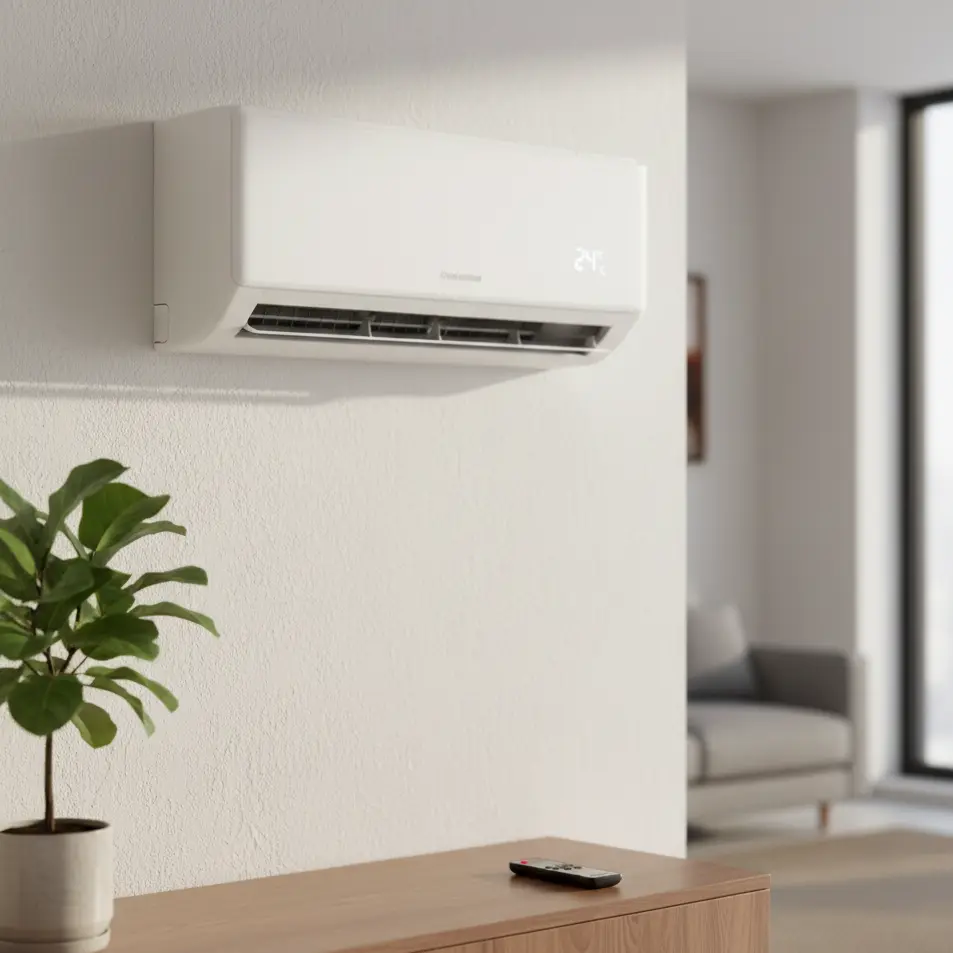
If you picture a standard wall-mounted unit inside and a single outdoor box on the wall or roof, you’re thinking of a split system.
Good for:
- Small offices and retail units
- Individual meeting rooms
- Home studies, bedrooms and loft conversions
Pros
- Relatively simple to install
- Quiet and efficient
- Each indoor unit has its own control
Cons
- One outdoor unit per indoor unit, unless you go multi-split
- Not ideal for very large open spaces on their own
If you just need to cool a couple of well-defined rooms, split systems are usually the first of the AC types to consider. PAR Refrigeration often recommends these for smaller businesses or residential customers who want targeted comfort rather than a whole-building solution.
Multi-split systems, more rooms, fewer outdoor units
Multi-split systems are a variation on the theme. Several indoor units are connected to a single outdoor unit.
Good for:
- Small to medium offices with multiple rooms
- Homes where you want AC in several key rooms
- Mixed-use spaces like salons with back offices and treatment rooms
Pros
- Fewer outdoor units cluttering the outside of the building
- Independent control in each room
- Efficient when designed correctly
Cons
- If the outdoor unit has a fault, it affects all connected indoor unitsPipe runs and design need a bit more thought
When PAR Refrigeration surveys a site with limited outdoor space, for example a tight courtyard or a shopfront with restricted frontage, multi-split is often the most practical of the AC types to keep things neat.
VRF / VRV systems, flexible for larger buildings
Variable Refrigerant Flow (VRF) or Variable Refrigerant Volume (VRV, a brand name) systems are the step up for bigger, more complex buildings.
Good for:
- Multi-storey office buildings
- Hotels, clinics and larger commercial premises
- Sites where room layouts and usage may change over time
Pros
- Many indoor units linked to fewer outdoor units
- Very precise zoning and control
- High efficiency, especially at part load
- Great flexibility when you reconfigure floors or add rooms
Cons
- Higher upfront cost
- Needs proper design and commissioning
- More complex maintenance, so you need a competent contractor
These are one of the most popular AC types for modern offices. PAR Refrigeration designs and maintains VRF and VRV systems where comfort, control and energy performance all matter, for example where tenants expect good climate control as standard.
Ducted systems, hidden but powerful
Ducted systems hide most of the equipment in the ceiling void or roof space, with air delivered through grilles or diffusers.
Good for:
- Offices with suspended ceilings
- Retail spaces where visual appearance is important
- High-end homes that want discreet cooling
Pros
- Very clean look with only grilles on show
- Even air distribution when designed well
- Can supply multiple rooms from one system
Cons
- Needs suitable ceiling or void space
- Ductwork adds cost and needs careful design
- Access for maintenance must be planned in
Among the main AC types, ducted systems are the “invisible” option. PAR Refrigeration often uses them in fit-outs where appearance is a priority and there’s a decent ceiling void to work with.
Ceiling cassette units, the tidy office favourite
Ceiling cassette units sit within a suspended ceiling, usually blowing air in four directions.
Good for:
- Open-plan offices
- Meeting rooms
- Shops and showrooms
Pros
- Good coverage from each unit
- Neat ceiling-mounted appearance
- Free wall space for furniture and displays
Cons
- Needs a suspended ceiling
- Access above the ceiling for pipework and drains
For many UK offices, cassette systems are the most familiar of the AC types. They balance looks, performance and practicality, which is why you see them everywhere from call centres to boardrooms.
Packaged and rooftop units, ideal for industrial and large retail
Packaged units are larger, self-contained systems often mounted on roofs or concrete plinths. They’re common in warehouses, gyms and supermarkets.
Good for:
- Large open-plan industrial or retail spaces
- Buildings with roof access and limited internal space
- Sites where plant noise is best kept outside
Pros
- High capacity cooling and sometimes heating
- Pre-packaged, so simpler for larger installs
- No indoor units, just ductwork and grilles
Cons
- Needs structural consideration for roof mounting
- Exposure to weather, so maintenance access is key
- Not suitable for every building type
PAR Refrigeration frequently reviews these AC types for clients with big, open spaces where comfort and fresh air both matter, for example gyms that need lots of cooling and ventilation at the same time.
Portable and window units, quick fixes, not long-term solutions
You’ll also see portable units on wheels and, less commonly in the UK now, window units.
Good for:
- Very short-term cooling
- Spaces where permanent installation isn’t allowed
Pros
- Low upfront cost
- Quick to deploy
Cons
- Noisy and often inefficient
- Usually only suitable for small areas
- Can create security or draught issues, especially hose-out-the-window setups
These AC types have their place, but if you’re looking for a comfortable, reliable environment for staff or customers, a properly designed fixed system from a specialist like PAR Refrigeration is almost always a better investment.
So, which AC types are right for you?
Rather than memorising every technical detail, it’s more useful to think in terms of a few simple questions:
- What kind of building is it? Office, shop, warehouse, home, or something mixed?
- How is the space used? Steady all day, or peaks and troughs? Lots of people or just a few?
- How likely is the layout to change? Long-term fixed, or desks moving every year?
- What matters most? Lowest upfront cost, lowest running cost, appearance, noise, or flexibility?
A reputable contractor like PAR Refrigeration will walk through these questions with you on site. They’ll usually suggest a short list of suitable AC types, explaining:
- Why they’re recommending those options
- Rough running costs and maintenance needs
- How easy each option is to live with day to day
When to bring in an expert
You don’t have to decide on the exact system yourself. Your role is to understand the basics, ask good questions and choose a partner you’re confident in.
It’s a good time to call in a specialist when:
- You’re planning a new fit-out or refurbishment
- Energy bills are creeping up and the building still feels stuffy
- You’re relying on portable units and open windows to get through summer
- Existing equipment is old, noisy or continually breaking down
The team at PAR Refrigeration can carry out a site survey, talk through how you use the space and help you land on the AC types that will give you comfort, control and sensible running costs for years to come.
In short, “AC” isn’t just one thing. From simple split systems to flexible VRF setups and discreet ducted solutions, there are several AC types to choose from. The right choice depends on your building, your people and your priorities. Get that match right, and climate control stops being something you notice and becomes something you can quietly rely on.
If you would like help finding the best AC type for your building give us a call today on 01924 872109 or complete our online contact form and a member of our team will be happy to help.


